
Why Tokens Disappear from Crypto Wallets: Hidden Swaps, Permissions and Malicious Signatures
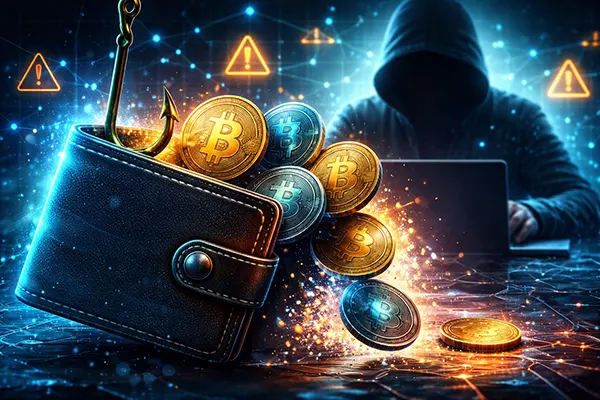
Cases where users suddenly lose tokens from their wallets are no longer rare in 2026. In most situations, the cause is not a direct “hack” of the blockchain, but actions taken by the wallet owner without fully understanding the consequences. Hidden swaps, unlimited token approvals and malicious signatures are among the most common mechanisms behind such losses. Understanding how these processes work helps reduce risks and avoid costly mistakes when interacting with decentralised services.
Hidden Token Substitution and Interface Manipulation
One of the most deceptive threats involves hidden token substitution within decentralised applications. Attackers create interfaces that visually mimic legitimate services, but alter contract addresses behind the scenes. As a result, a user may believe they are swapping or interacting with a trusted asset, while in reality approving or sending funds to a malicious token or contract.
Another variation relies on so-called “spoof tokens” that appear identical in name and symbol to well-known assets. Since many wallets display token names rather than contract addresses by default, users can be misled into interacting with counterfeit versions. This is particularly common in phishing campaigns distributed via social media, email or fake support messages.
Modern attack techniques also exploit browser extensions and injected scripts. If a compromised website loads malicious JavaScript, it can modify transaction details at the moment of confirmation. Even experienced users may overlook subtle differences, especially when dealing with complex DeFi interactions involving multiple steps.
How to Detect and Avoid Hidden Substitution
The most reliable defence is verifying contract addresses directly from official project sources. Relying solely on token names or logos is no longer sufficient, as attackers replicate these elements with high accuracy. Bookmarking trusted resources and avoiding links from unknown messages reduces exposure to phishing environments.
It is also important to review transaction details within the wallet interface before signing. Many wallets now display decoded contract interactions, including token addresses and permissions. Taking a few extra seconds to confirm these details can prevent irreversible losses.
Using hardware wallets or secure signing devices adds an additional layer of protection. These tools isolate private keys and provide clearer transaction summaries, making it harder for manipulated interfaces to deceive users.
Unlimited Approvals and Smart Contract Permissions
Token approvals are a core feature of decentralised finance, allowing smart contracts to access user funds for trading, staking or lending. However, many applications request unlimited approvals by default, granting contracts permission to spend all tokens of a given type without further confirmation.
If the approved contract becomes compromised or is malicious from the start, attackers can transfer tokens without additional interaction from the user. This often happens long after the initial approval, making it difficult to trace the origin of the issue.
In 2026, several high-profile incidents have shown that even established protocols can be vulnerable due to bugs or governance exploits. Users who granted broad permissions to these contracts faced unexpected losses when vulnerabilities were exploited.
Managing and Revoking Risky Permissions
Regularly reviewing active approvals is a critical security practice. Tools such as blockchain explorers and specialised dashboards allow users to see which contracts have access to their tokens and revoke permissions when they are no longer needed.
Instead of granting unlimited access, users should choose limited approvals whenever possible. Some modern interfaces now allow specifying exact amounts, reducing exposure if a contract is compromised.
Separating funds across multiple wallets is another practical approach. Keeping a primary wallet for storage and a secondary one for interacting with applications limits the potential impact of a single compromised approval.
Malicious Signatures and Off-Chain Exploits
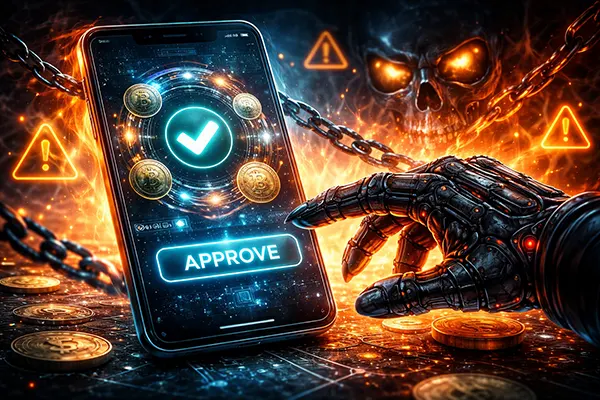
Not all threats involve direct token transfers. Malicious signatures, especially those using standards like EIP-712, allow attackers to gain control over assets without triggering a typical on-chain transaction. These signatures often appear as harmless requests, such as “login” or “verify ownership”.
Once signed, the data can be used to authorise actions like token transfers, NFT sales or approval changes. Since the signature itself does not immediately move funds, users may not realise the risk until assets are already gone.
Attackers frequently distribute such requests through fake airdrops, NFT mint pages or compromised communities. The psychological factor plays a significant role: urgency, rewards and social proof are used to pressure users into signing without careful inspection.
Understanding Signature Risks in Practice
Before signing any message, it is essential to understand what the request actually authorises. Many wallets now provide decoded previews, but not all messages are easily readable. If the purpose of a signature is unclear, it is safer to reject it.
Avoid connecting wallets to unknown or unverified websites. Even a single interaction can expose the wallet to signature-based exploits. Using separate wallets for experimentation and daily activity helps reduce overall risk.
Security awareness remains the strongest protection. Most token losses are not caused by flaws in blockchain technology, but by social engineering and interface manipulation. Staying cautious and verifying each action ensures that control over assets remains in the user’s hands.