
How to Store Cryptocurrency at Home Without Unnecessary Risks: A Practical Guide for Beginners
Storing cryptocurrency at home in 2026 is no longer an unusual choice reserved for technical specialists. With the growth of self-custody solutions and increasing awareness of exchange-related risks, more beginners are deciding to take direct control of their digital assets. However, home storage requires a clear understanding of security principles, real-world threats and practical procedures. This guide explains how to organise safe cryptocurrency storage at home using methods that are realistic, accessible and aligned with current security standards.
Understanding Self-Custody and the Real Risks Involved
Self-custody means that you, and only you, control the private keys that grant access to your cryptocurrency. Unlike keeping funds on a centralised exchange, where the company technically holds the keys on your behalf, self-custody removes counterparty risk. In recent years, exchange failures, regulatory freezes and hacking incidents have shown that “not your keys, not your coins” is more than a slogan — it is a practical rule of digital asset ownership.
However, self-custody shifts responsibility entirely to the owner. The most common risks in 2026 are not advanced cyber-attacks but simple human errors: losing a recovery phrase, storing it in an unsafe place, or falling victim to phishing schemes. Malware designed to capture seed phrases and clipboard hijacking attacks remain active threats, particularly for users who rely only on software wallets connected to the internet.
Physical security is another factor often underestimated. If someone gains access to your hardware wallet and recovery phrase, they can transfer funds irreversibly. Cryptocurrency transactions cannot be reversed by a bank or authority. This irreversible nature makes proper storage planning essential from the very beginning.
Hot Wallets vs Cold Wallets: What Beginners Should Choose
Hot wallets are applications connected to the internet, typically installed on a smartphone or computer. They are convenient for daily transactions and small balances. Modern reputable wallets use strong encryption and biometric protection, but because they remain online, they are inherently more exposed to phishing, malicious browser extensions and compromised devices.
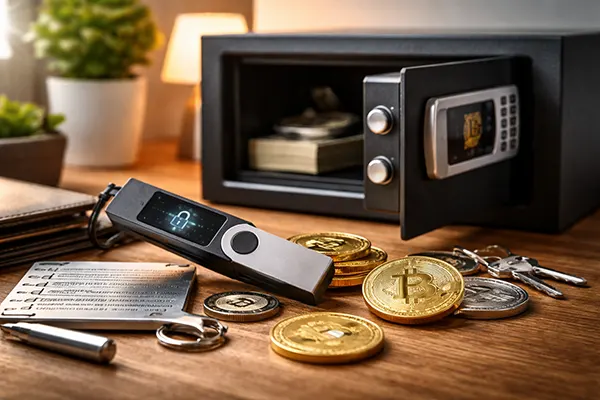
Cold wallets, by contrast, store private keys offline. Hardware wallets such as Ledger, Trezor and other established devices isolate private keys from internet-connected systems. In 2026, hardware wallets remain the recommended option for storing meaningful amounts of cryptocurrency at home because they significantly reduce the risk of remote hacking.
For beginners, a hybrid approach is usually the safest and most practical: keep a small amount in a hot wallet for everyday use, and store the majority in a hardware wallet kept offline. This structure balances usability with security and reduces the consequences of a single point of failure.
Setting Up a Secure Home Storage System Step by Step
The first step is purchasing a hardware wallet directly from the official manufacturer or an authorised distributor. Buying second-hand devices or from unknown marketplaces creates unnecessary risk, as devices can be tampered with. Always initialise the device yourself and ensure that the recovery phrase is generated offline during setup.
When creating your recovery phrase (usually 12 or 24 words), write it down on paper or engrave it on a dedicated metal backup plate designed for fire and water resistance. In 2026, metal seed storage solutions have become affordable and widely available, offering additional durability compared to paper.
Never store your recovery phrase digitally — not in cloud storage, not in email drafts, not in password managers. Even encrypted digital storage increases the attack surface. The safest practice remains an entirely offline backup stored in a secure physical location.
Where and How to Store the Recovery Phrase Safely
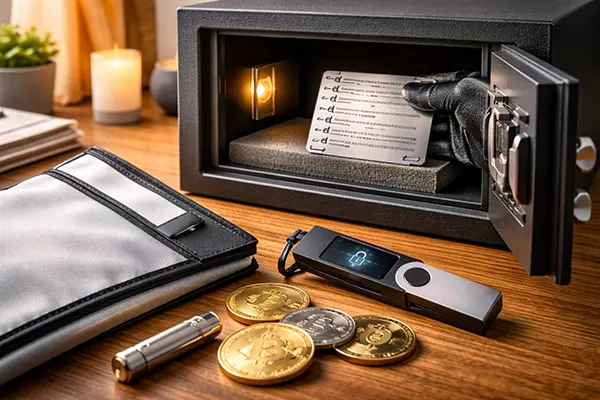
Your recovery phrase should be stored separately from the hardware wallet itself. Keeping both in the same drawer defeats the purpose of layered security. A basic but effective approach is dividing storage locations — for example, keeping the hardware wallet at home and the recovery phrase in a secure safe or another trusted physical location.
A fireproof and waterproof home safe provides an additional layer of protection against environmental damage. While it cannot eliminate theft risk entirely, it significantly reduces accidental loss due to fire or flooding. For higher amounts, some individuals choose professional safe deposit boxes, depending on their jurisdiction and comfort level.
It is also advisable to create clear inheritance instructions. In the UK and many other countries, crypto assets form part of an estate, but without access to the recovery phrase, heirs cannot claim them. A legally prepared will referencing secure storage instructions can prevent permanent loss.
Advanced Precautions for 2026: Multi-Signature and Operational Discipline
As digital assets gain wider adoption, security tools have become more sophisticated. Multi-signature wallets, which require approval from two or more keys to authorise a transaction, are increasingly accessible to private individuals. This setup reduces the risk that a single compromised device or stolen key results in total loss.
For example, one key can be stored on a hardware wallet at home, another on a separate device in a different location, and a third held as a backup. Even if one key is exposed, an attacker cannot move funds without additional signatures. While multi-signature setups require careful configuration, they are no longer limited to institutional investors.
Operational discipline is just as important as technology. Always verify wallet addresses directly on the hardware device screen before confirming transactions. Avoid using public Wi-Fi when interacting with cryptocurrency software. Keep your computer’s operating system and antivirus solutions updated to minimise exposure to known vulnerabilities.
Common Mistakes to Avoid When Storing Crypto at Home
One of the most frequent mistakes is overcomplicating the setup. Beginners sometimes attempt advanced configurations without fully understanding them, increasing the likelihood of misconfiguration. Security should be strong but manageable. A properly used hardware wallet with a secure backup is already a robust solution for most individuals.
Another mistake is discussing holdings publicly. Revealing the size of your crypto portfolio on social media or in casual conversations can create unnecessary personal risk. Discretion remains a fundamental principle of asset protection.
Finally, many losses occur due to simple negligence — failing to test recovery procedures. After setting up your wallet, perform a controlled recovery test using the recovery phrase on a reset device to confirm that it works correctly. This small step can prevent irreversible mistakes later.