

What Are Liquidity Pools and Which Risks Beginners Often Overlook
Liquidity pools have become one of the foundations of decentralised finance (DeFi). They allow users to trade digital assets, earn rewards, and participate in financial services without relying on traditional intermediaries such as banks or brokerage firms. In 2026, liquidity pools continue to power major decentralised exchanges including Uniswap, PancakeSwap, Curve, Balancer, and many newer blockchain ecosystems. While the concept appears straightforward, many newcomers focus exclusively on potential returns and fail to recognise the technical, financial, and security risks involved. Understanding how liquidity pools function is essential before committing any capital.
How Liquidity Pools Work in Modern DeFi
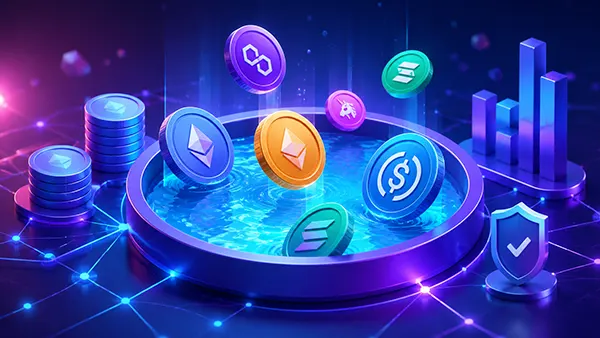
A liquidity pool is a collection of cryptocurrency assets locked inside a smart contract. These assets provide the liquidity needed for decentralised trading. Instead of matching buyers and sellers directly through an order book, decentralised exchanges use automated market makers (AMMs) that rely on liquidity pools to facilitate transactions.
Most pools consist of two assets paired together, such as ETH and USDC. Liquidity providers deposit both assets according to a predefined ratio. In exchange, they receive liquidity provider (LP) tokens representing their share of the pool. Whenever traders use the pool, transaction fees are distributed among liquidity providers proportionally to their contribution.
The size of a liquidity pool affects trading efficiency. Larger pools typically experience lower slippage and attract greater trading volume. As DeFi adoption continues to grow across Ethereum, Solana, Base, Arbitrum, Avalanche, and other networks, liquidity pools remain critical infrastructure for decentralised financial markets.
Why Liquidity Providers Receive Rewards
The primary incentive for providing liquidity is earning a share of trading fees. Every swap executed through the pool generates fees that are distributed among liquidity providers. Depending on the protocol, these rewards may be paid continuously or accumulated over time.
Some DeFi projects also offer additional incentives through liquidity mining programmes. Participants can receive governance tokens, ecosystem rewards, or staking benefits alongside standard trading fees. These programmes are often designed to attract capital and increase liquidity within a protocol.
However, high advertised yields should always be evaluated carefully. Annual percentage yields exceeding market averages often reflect elevated risk levels, unsustainable token emissions, or limited liquidity. Reward rates that appear attractive today may decline significantly as more users join the pool.
Financial Risks That Many Beginners Underestimate
One of the most misunderstood risks is impermanent loss. This occurs when the relative price of assets within a pool changes significantly after liquidity is deposited. Although providers continue earning fees, the value of their holdings may become lower than if they had simply held the assets outside the pool.
For example, if one asset in a trading pair experiences rapid appreciation while the other remains stable, the pool automatically rebalances. This mechanism can reduce exposure to the stronger-performing asset and lead to lower overall returns compared with a passive holding strategy.
Market volatility introduces additional uncertainty. During periods of extreme price movement, liquidity providers may face temporary or permanent reductions in portfolio value. Even profitable pools can become less attractive if trading fees fail to compensate for market-related losses.
Hidden Costs Beyond Impermanent Loss
Transaction costs remain an important consideration. Although some blockchains offer relatively low fees, network congestion can significantly increase operational expenses. Frequent deposits, withdrawals, and reward claims may reduce net profitability.
Another overlooked issue involves token quality. Some pools contain newly launched or low-liquidity assets with limited market history. If a project loses community support or experiences a sharp decline in demand, the value of liquidity provider positions can deteriorate rapidly.
Tax obligations also deserve attention. In many jurisdictions, providing liquidity, receiving rewards, and withdrawing assets can create taxable events. Regulations continue evolving globally in 2026, making it important for participants to understand local reporting requirements before engaging in DeFi activities.
Security Challenges and Risk Management Strategies
Smart contract vulnerabilities remain one of the most significant threats within decentralised finance. Even audited protocols can experience exploits due to coding errors, unexpected interactions, or newly discovered vulnerabilities. Historical examples have demonstrated that substantial amounts of capital can be lost through security breaches.
Cross-chain bridges and interconnected protocols introduce additional complexity. Many modern liquidity pools interact with multiple blockchains, increasing the number of potential attack surfaces. A weakness in one component may affect assets throughout an integrated ecosystem.
Scams continue targeting inexperienced investors. Fraudulent projects may advertise unrealistic returns, manipulate token prices, or conduct rug pulls in which developers remove liquidity and abandon the project. Thorough due diligence remains essential regardless of promised yields.
Practical Steps for Safer Participation
Before joining any liquidity pool, investors should review the project’s documentation, security audits, development activity, and community engagement. Established protocols with transparent governance structures generally provide greater confidence than anonymous or poorly documented projects.
Diversification can reduce exposure to individual failures. Rather than allocating all capital to a single pool, many experienced participants distribute funds across multiple protocols, assets, and blockchain networks. This approach helps limit the impact of isolated problems.
Liquidity pools can offer legitimate opportunities to generate income within decentralised finance, but success depends on understanding both rewards and risks. Beginners who evaluate impermanent loss, token quality, smart contract security, and overall market conditions are better positioned to make informed decisions and avoid costly mistakes.